


Quite often, patients complain that their finger joints hurt.All pathologies have pronounced specific symptoms, so a specialist will quickly make a diagnosis and prescribe the correct treatment.
Rheumatoid arthritis
Rheumatoid arthritis is a serious disease accompanied by an inflammatory process.It causes pain in the joints and their deformation.Pathology usually occurs in people over 30 years of age.Women suffer from it 3 times more often than men.
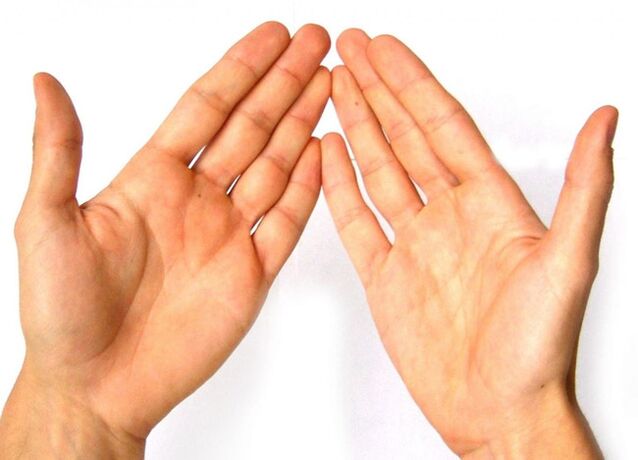
Rheumatoid arthritis occurs suddenly and is associated with reduced function of the immune system.In this disease, immune cells mistake joint cells for viruses or bacteria and try to eliminate them.The destruction process can last for many years.
The following symptoms of the disease are distinguished:
- severe joint pain, worsening at night or in the morning;
- stiffness of joints after sleep;
- high body temperature;
- sleep disorders;
- fatigue;
- decreased appetite;
- sudden weight loss;
- formation of nodules in the elbow area.
Rheumatoid arthritis develops due to the following factors:
- previous sore throat or flu;
- joint injuries;
- infectious pathology;
- prolonged stress and depression;
- genetic predisposition.
A characteristic feature of rheumatoid arthritis from osteoarthritis is a decrease in pain during exercise.If the joints in the fingers of the right hand hurt and swell, then the same symptoms appear on the left hand.Over time, the disease can affect other joints.
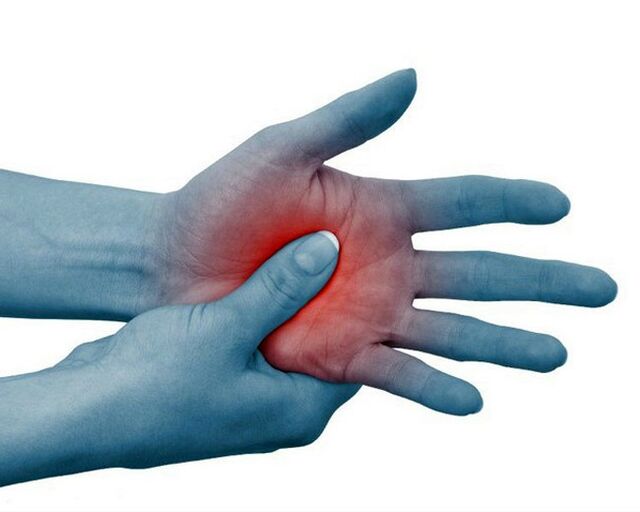
If you start therapy at an early stage, you can avoid joint deformation and destruction.
Shades!Breastfeeding for two years reduces the risk of rheumatoid arthritis in women by 2 times.
Treatment
Modern methods of treating rheumatoid arthritis include the following:
- aurotherapy;
- cytostatics;
- taking antimalarial medication;
- sulfonamides;
- D-penicillamine.
On average, even an experienced rheumatologist takes about 6 months to choose the correct treatment method, as he examines the patient's characteristics and his tolerability to drugs.
What is aurotherapy?
Aurotherapy involves taking medications that contain gold salts.
Doctors recommend using gold preparations at the initial stage of the disease.With their help, it is possible to achieve a positive effect in the treatment of acute, rapidly developing pathology with severe pain and early degenerative changes in the joints.Gold-based medications are prescribed to patients in cases where non-steroidal anti-inflammatory drugs have not alleviated their condition.
The main advantage of aurotherapy is that it can be used for concomitant inflammatory pathologies and the presence of malignant tumors.Also, during the research, scientists found that gold salts actively fight fungi and some bacteria, including Helicobacter pylori.
The course of treatment with gold preparations is 2-3 months.If during this period the patient's condition has not improved, then this technique is cancelled.
Pay attention!Many people experience relapses of rheumatoid arthritis some time after gold treatment.The rheumatologist can re-prescribe aurotherapy.Sometimes such treatment can last for years if it does not entail negative consequences on other organs.
Is chemotherapy effective?
To eliminate the symptoms of rheumatoid arthritis, it is customary to use cytotoxic drugs.
Since the disease is of autoimmune origin, it is not surprising that doctors prescribe immunosuppressants.Their main advantage is their high efficiency at a relatively low dose.Patients with rheumatoid arthritis are prescribed 5 or even 20 times less dose of cytostatics than patients with cancer.The drugs have proven effective in the fight against severe forms of the disease with a high degree of progression.
Another advantage of treatment with immunosuppressants is the minimal number of side effects.Quite rarely, patients complain of the following symptoms:
- skin rash;
- bowel dysfunction;
- chills;
- difficulty urinating.
If the drug is discontinued or the doctor adjusts the dose, the side effects disappear quickly.The course of treatment is 1 month.
Treatment of finger joints with antimalarial drugs
Treatment of rheumatoid arthritis with antimalarials is extremely rare.The biggest advantage of this treatment is good tolerability of the substances.A major disadvantage of this treatment is that antimalarial drugs work slowly.Their effect is noticeable after 6-12 months, but the therapeutic effect is quite weak.
Will sulfonamides help rheumatoid arthritis?
Drugs from the sulfonamide group are successfully used to treat finger pain.Their benefits include:
- Good tolerance.
- Low rate of complications, if any.
- Affordable price.
The disadvantage of these drugs is their slow effect.The positive effect is noticeable only 3 months after the start of the therapy course.
How to treat the disease with D-penicillamine?
If the patient is suitable for treatment with gold preparations or the use of a cytostatic, then there is no need to prescribe D-penicillamine.It is much inferior to the listed treatment methods in terms of effectiveness, but significantly exceeds them in the number of side effects, the frequency of their occurrence and the degree of complications.Therefore, treatment with D-penicillamine is used in cases where the patients do not tolerate gold salts and cytostatics well.
D-penicillamine is used effectively in patients who have complications in the heart, respiratory organs or kidneys.It must be taken for 3 to 5 years, then a break of several years will be needed, after which the course must be repeated.
Gout - symptoms and treatment
One of the dangerous diseases of joints and tissues is arthritis.It occurs due to a metabolic disorder in the body.Gout is characterized by an increased amount of uric acid in the lymph.
Symptoms of the disease include:
- inflammation of the joint of the big toe;
- severe pressing pains in the morning or at night;
- increased body temperature;
- skin redness;
- growths on legs or arms.
If treatment is not started promptly, the patient may develop gout.Possible complications also include urolithiasis and kidney failure, which can lead to death.
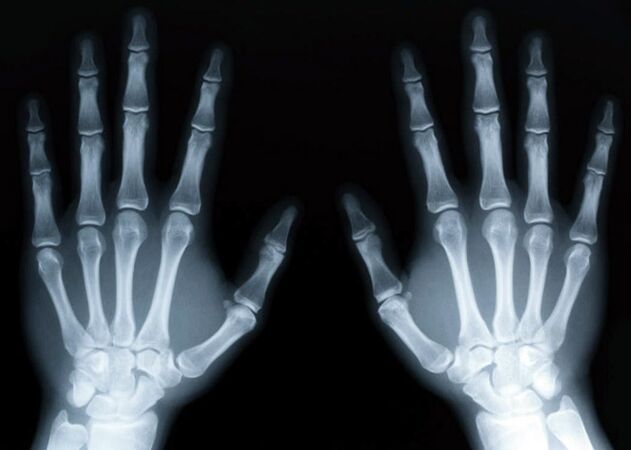
For the treatment of gout, non-steroidal anti-inflammatory drugs are used for 1-2 weeks.
To quickly reduce the concentration of uric acid in the body, anti-rheumatic drugs are prescribed.
To eliminate the acute symptoms of gout, experts prescribe a drug based on the alkaloid of the tubers of the magnificent lily family.Glucocorticoids are used to relieve swelling and pain.These drugs quickly remove inflammation, but have a negative effect on the immune system.
Psoriatic arthritis
About 15% of patients diagnosed with psoriasis have problems with their finger joints.Signs of this disease are:
- joint deformation;
- pain syndrome at night;
- numbness in the limbs;
- discoloration of the skin in burgundy color at the site of disease development;
- finger swelling;
- limited mobility.
Most patients suffering from psoriatic arthritis experience damage to the nail plates.First, small pits form on their surface, then their color changes due to disruption of microcirculation.
Quite often pregnant women are diagnosed with psoriatic arthritis.This is because the disease is also of hormonal origin, and a woman undergoes hormonal changes in her body during pregnancy.Increased signs of gout in pregnant women are often associated with weight gain.
The following causes of psoriatic arthritis have been identified:
- damages;
- severe stress and emotional stress;
- excessive physical activity;
- infectious diseases;
- hereditary disposition.
The following groups of medicines are used to treat psoriatic arthritis:
- Non-steroidal drugs.Designed to eliminate inflammation and reduce pain.
- Glucocorticosteroids: injected into the joint cavity.
- Cytostatic drugs from the group of folic acid antagonists: are the most popular systemic drug.
- An immunosuppressive agent that selectively acts on T-lymphocytes: used to slow down the changes that occur in bone and cartilage tissue.
For psoriatic arthritis, it is recommended to give up alcoholic beverages, reduce the consumption of citrus fruits and smoked foods, and stick to a low-calorie diet.
Osteoarthritis – how is it treated and what are the consequences of the disease?
Elderly people quite often complain that their finger joints are swollen.This can be one of the signs of osteoarthritis.The disease can occur for the following reasons:
- hormonal imbalance;
- genetic predisposition;
- work-related stress and injuries;
- age-related metabolic disorder.
Joint pain can help identify the disease.An accurate diagnosis is made by a specialist after X-ray examination and MRI.
Gymnastics will help alleviate the patient's condition.The set of exercises is chosen by the doctor with a focus on the individual characteristics of the patient with osteoarthritis.Therapy also includes following a diet to lose excess weight, if any.You cannot do without thermal procedures.Paraffin baths are recommended, to which mineral oil must be added.
To eliminate pain and relieve swelling, a non-steroidal anti-inflammatory drug from the group of propionic acid derivatives and acetylsalicylic acid is prescribed.Among analgesics, a drug from the anilide group is often used.Massage sessions will help warm up your muscles and improve blood circulation.
If treatment is not started in time, the person will be unable to cope with everyday activities in the future.In such cases, joint replacement surgery cannot be avoided.
What is rhizarthrosis?
If a patient has pain in the thumb, it may indicate that he has rhizarthrosis.The reasons for this phenomenon can be:
- joint overload;
- previous infectious disease;
- damages;
- poisoning of the body.
Treatment of rhizarthrosis in stages 1-2 includes taking chondroprotectors.They activate the process of the emergence of new cartilage cells, which helps to eliminate the disease.
It is quite popular to use manual therapy to treat rhizarthrosis.The therapist can realign the changed joint, as a result of which the pain syndrome will disappear.In addition, you can massage the thumb to increase the tone of the cartilage tissue and improve joint mobility.
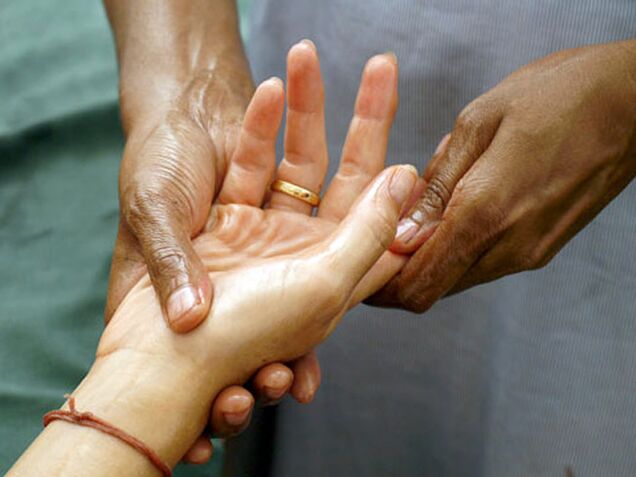
If the patient is diagnosed with 3rd stage of rhizarthrosis, intra-articular injections of hyaluronic acid are prescribed.It is also effective to use glucocorticosteroids and non-steroidal anti-inflammatory drugs.They increase blood flow in the affected joint, eliminate pain and relieve swelling.
Traditional medicine for pain in the fingers
You can cope with pain not only with the help of medicine, but also by resorting to folk remedies.For acute pain, it is effective to use a gauze pad soaked in apple cider vinegar.To relieve swelling, compresses using baked onions or boiled potatoes are perfect.It is helpful to warm the sore joint with warm sea salt and rub it with fir oil.
Tinctures
A common treatment method is tinctures.You can use vodka for preparation.You need to take 50 ml of vodka and 30 ml of valerian tincture, mix both components and add a few pods of red pepper.After 3 hours, a cotton swab is moistened in the resulting mixture and applied to the phalanx.The positive effect is noticeable after a month of such treatment.
Another effective remedy is a tincture based on chestnut flowers.It is enough to collect the raw materials and mix them with vodka.Leave for 14 to 20 days.Rub the product in when your fingers become numb and you feel pain.Instead of chestnut flowers, it is allowed to use purple.
Ointments
If your joints hurt when you squeeze your fingers, you should use an ointment of mustard and honey.To prepare it, combine 5 g of mustard and 15 g of honey.Then add 30 ml of olive oil, evaporate the mixture in a water bath to a thick consistency, cool and use daily to treat affected joints.
For pain in the joint in the index finger of the right hand, an ointment based on bay leaves and juniper needles is recommended.Both components must be mixed in equal proportions, then add 50 g of butter.You can use the ointment during regular joint massage.